I have been shocked to hear about the devastation caused by the fires on Kangaroo Island.
We visited the island in July 2014 (during the Australian winter but the only time we could make it) and found it a fascinating place. We stayed on the island for two nights, taking two day tours organised by the local ferry company.
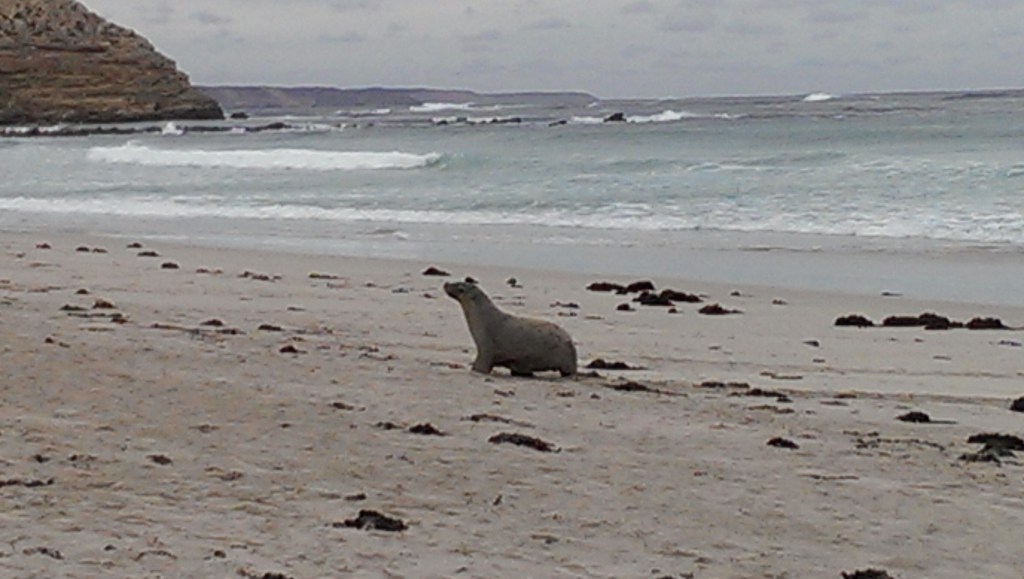
On day one we took the Seal Bay Discovery Tour, starting at Cliffords Honey Farm, which I have written about elsewhere. After a tasty lunch of vegetable soup and chicken at Vivonne Bay Bistro we went to Seal Bay to see the colony of Australian Sea-lions. Dave the warden escorted us, warning us to keep together as a groupand stay 10m away from animals, both to avoid disturbing them (sea lions cannot sleep whilst out at sea catching food, so need their rest on land) and for safety, as they can move faster on loose sand than humans can!
Then to Raptor Domain Birds of Prey, where Don Irwin and one of his helpers introduced some of the residents. Shush the Barn Owl was hiding in a hollow tree and came out when we called. I got to hold a Sooty Owl, and my husband Neil held Banjo the Kookaburra. Kookaburras have the ability to hold their head still while their body is moving, which was very entertaining when demonstrated.
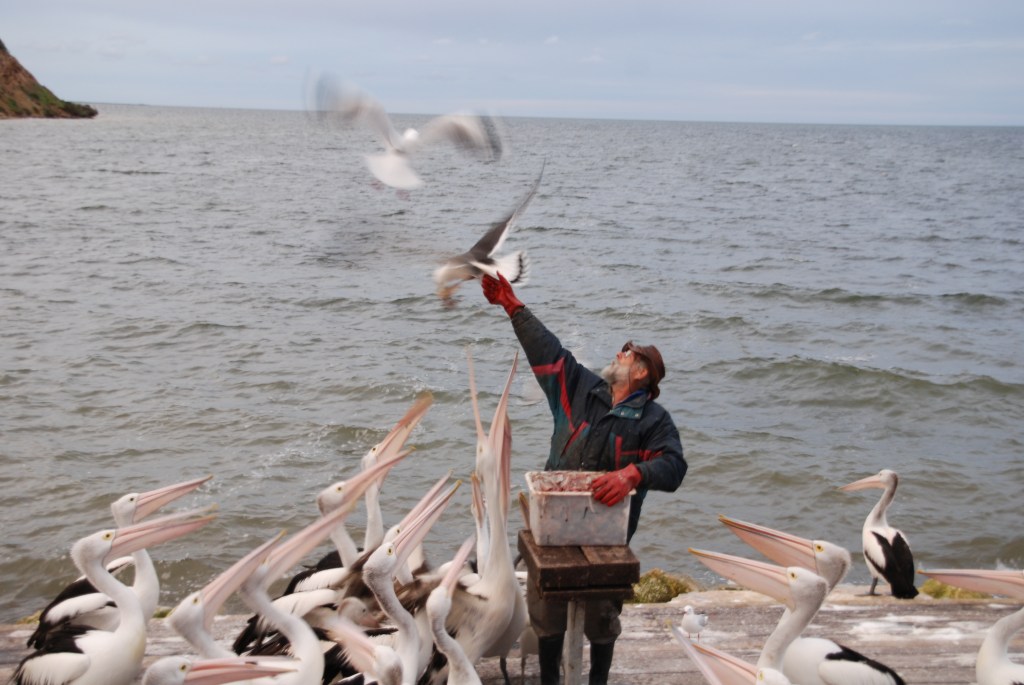
Our next stop was Kingscote to see John feeding the pelicans, with a highly personalised and entertaining though not entirely politically correct commentary. After the fisherman were stopped from throwing away their waste fish at the end of the day when they brought in their catch, John felt sorry for the hungry pelicans who had got in to the habit of hanging around the wharf waiting for them, and got permission to feed them himself. According to him, there are no penguins left on the island as the New Zealand fur seals have eaten them all. The pelicans grew quite impatient for him to stop talking and get on with the feeding.
The following day we took the ‘Remarkably Wild tour. Our first stop Emu Ridge Eucalyptus Distillery: another sheep farm whose owners diversified. The still is a very simple process. The eucalyptus is put in the top with water, a fire is lit underneath and the resulting steam is then condensed to produce oil and water, which are separated. The oil then goes through a second process to refine it before bottling and the eucalyptus leaf residue is used as mulch. They also produce tea tree oil, and are aiming to diversify into other native plants. In the shop they sell eucalyptus oil, eucalyptus based toiletries and sweets, and (worryingly) a book of road kill recipes. Skippy the bush vindaloo, anyone? Also things produced by local craftspeople. There was an advert for a man who makes hats from the skins of feral cats (a pest on the island).
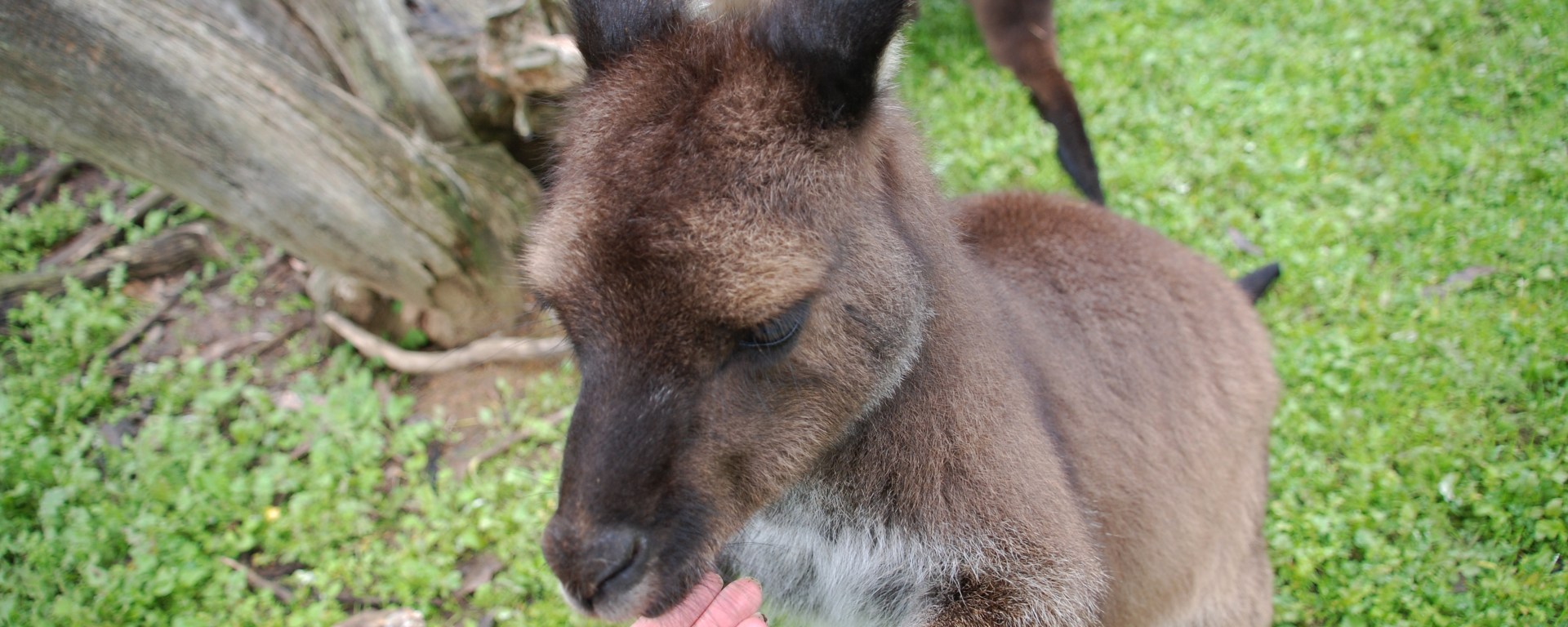
The next stop was Kangaroo Island Wildlife Park, which had recently taken over by Sam and Dana Mitchell. (The Mitchells have stayed put during the fires and are working hard to treat injured wildlife – you can donate here.) The animals we encountered there were rescued ones, and often tame. We were able to hand feed the kangaroos.
After a lunch of calamari and chips followed by soft meringue with fruit at Kangaroo Island Wilderness Lodge, the weather turned pretty wet for our drive through Flinders Chase National Park to the Remarkable rocks.
Remarkable rocks are large chunks of granite that have been sculpted by the elements. They are also covered with orange lichen and slippery when wet, so we did not get too close. Then we continued to Cape de Couedic Lighthouse and down the boardwalk to Admiral’s Arch. It was really wet by this time but worth it to reach the bottom and see the natural arch formed from a collapsed cave and the New Zealand fur seal colony that lives there. After a stop for a warming hot drink at the Flinders Chase National Park Information Centre our final scheduled stop was at a nature reserve where wildlife can be seen in a more natural environment where we saw some kangaroos and koalas, as well as an echidna crossing the road en route.
The weather may have been against us, but it was a fascinating trip, and I hope that the island is able to recover.
 Travels with me aren't
One thought on “Kangaroo Island remembered”