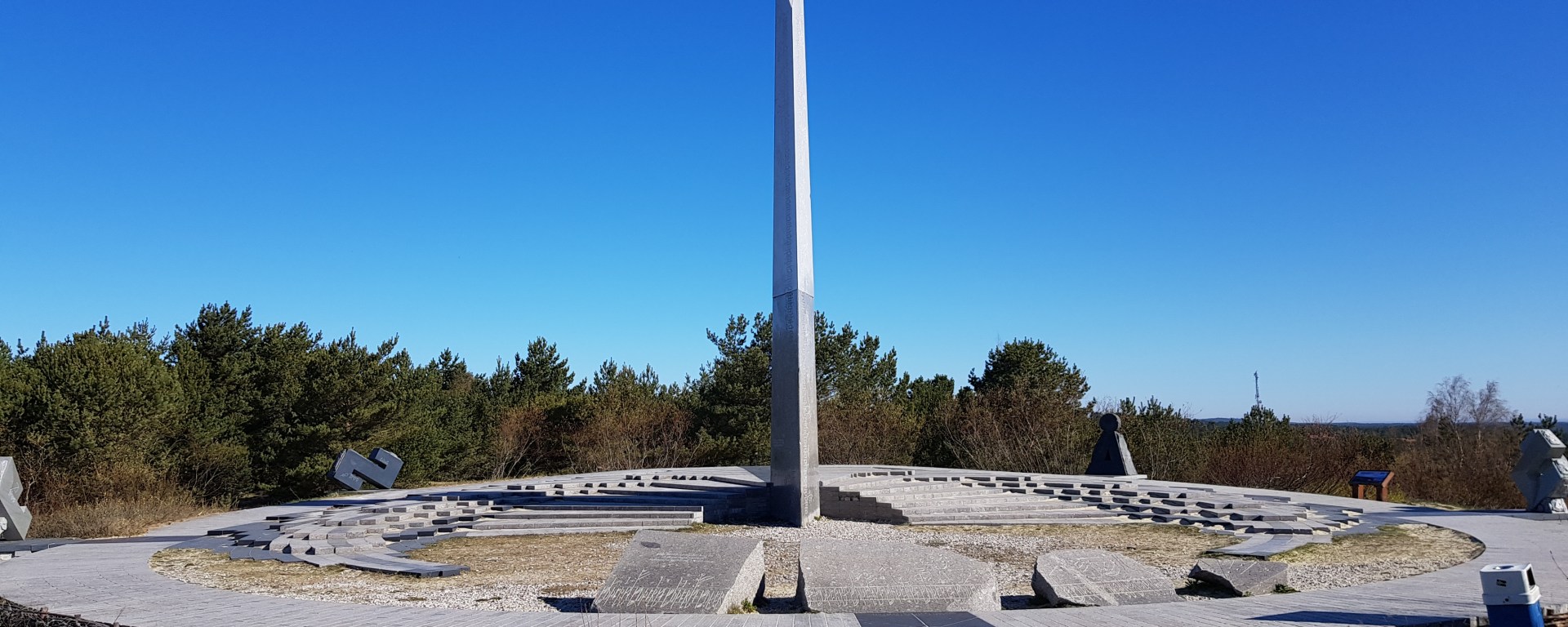
The sundial is massive. A granite obelisk 13m high and weighing 36 tons, surrounded by granite slabs is not the sort of thing you would expect to find on the top of a giant sand dune, but Nida is full of surprises.
The Curonian Spit is a long, thin, curved sand-dune spit stretching almost a hundred km from the what is now the Russian exclave of Kaliningrad (formerly the German city of Königsberg) to a narrow straight opposite the Lithuanian port of Klaipeda. Nida, a former fishing village just north of the Russian border, is now a holiday resort and UNESCO World Heritage site, with a network of well-marked walking and cycling routes that lead through the dunes and forest between the lagoon and the Baltic shore.
The ‘Cognitive Path’ leads from the southern end of Nida, to the top of the Parnidis dune, 53m above sea level. It is here that the sundial, designed by architect Ricardas Kristopavičius, was built in 1995. If you are thinking that the top of a shifting sand dune is a risky place to erect such a monument, you may be right: the obelisk was damaged in a hurricane just four years later. Restored in 2010, it again casts its shadow on a system of steps representing hours, months of the year, equinoxes and solstices. Perhaps it is marking out the time to its own destruction: the footsteps of visitors are inexorably reducing the height of the dune. Keeping to the boardwalk paths is essential.
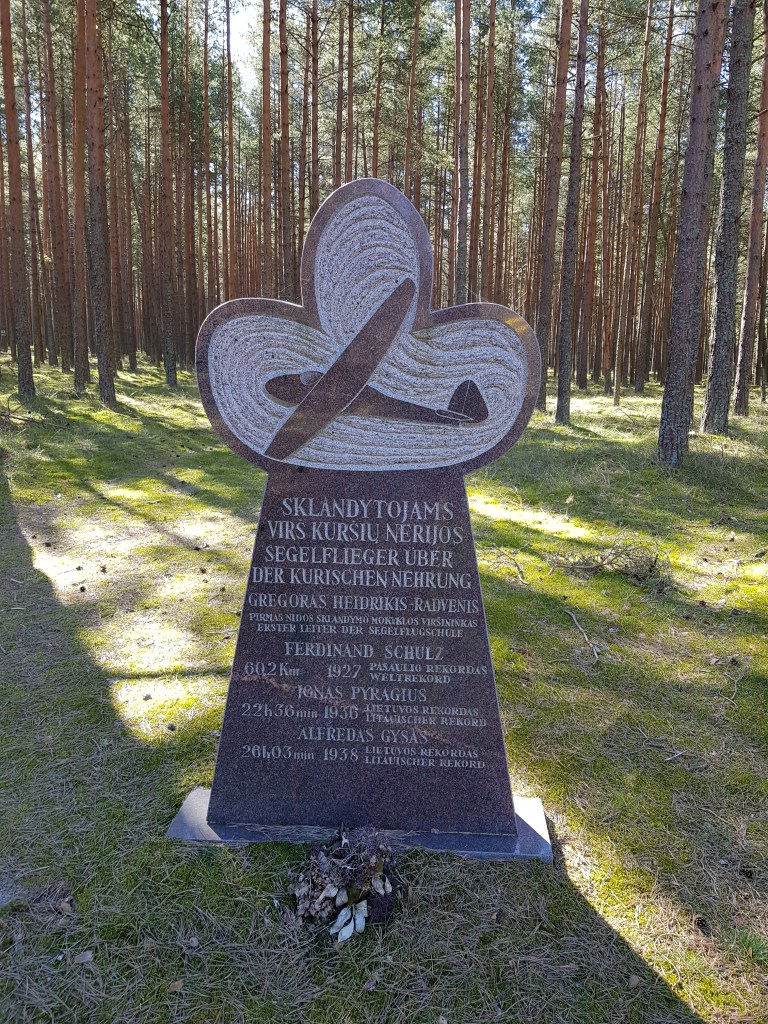
Turning at last away from the dune and views of the lagoon, paths pass through forests of birch and pine. Past the site of a stone-age settlement, in the depths of Nida forest can be found the remains of more recent human activity: a memorial to the Nida Gliding School, which operated from 1933 to 1939. The school trained a total of 508 pilots: 282 to ‘A-level’ standard, 147 to ‘B-level’ and 79 to ‘C-level.’ Counter-intuitively (to my mind at least), ‘A-level’ was the most basic, requiring pilots only to stay aloft for 30 seconds and fly in a straight line. ‘C-level’ pilots needed to stay up for at least five minutes, flying in a figure of eight pattern.
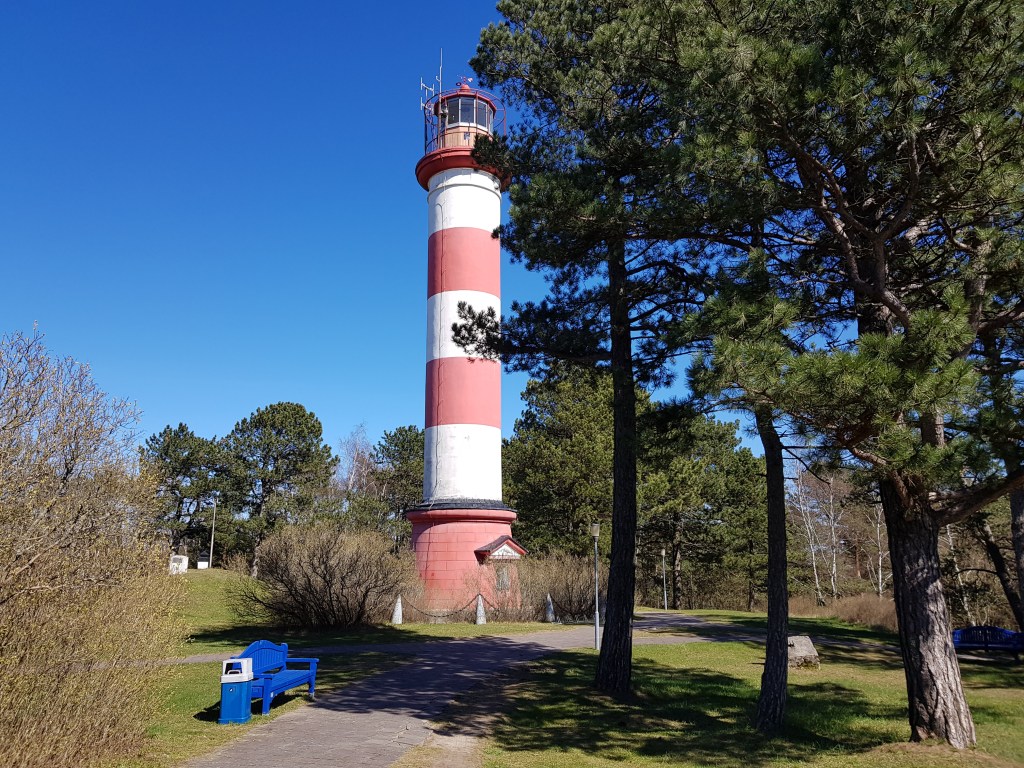
Another route through forest leads up the Urbas Hill. At the top, the Baltic can be just be glimpsed in the distance but turn the other way through the trees and you find a red and white striped lighthouse. A wide path leads back to the town – an after-dinner stroll to the lighthouse is popular in the summer season.
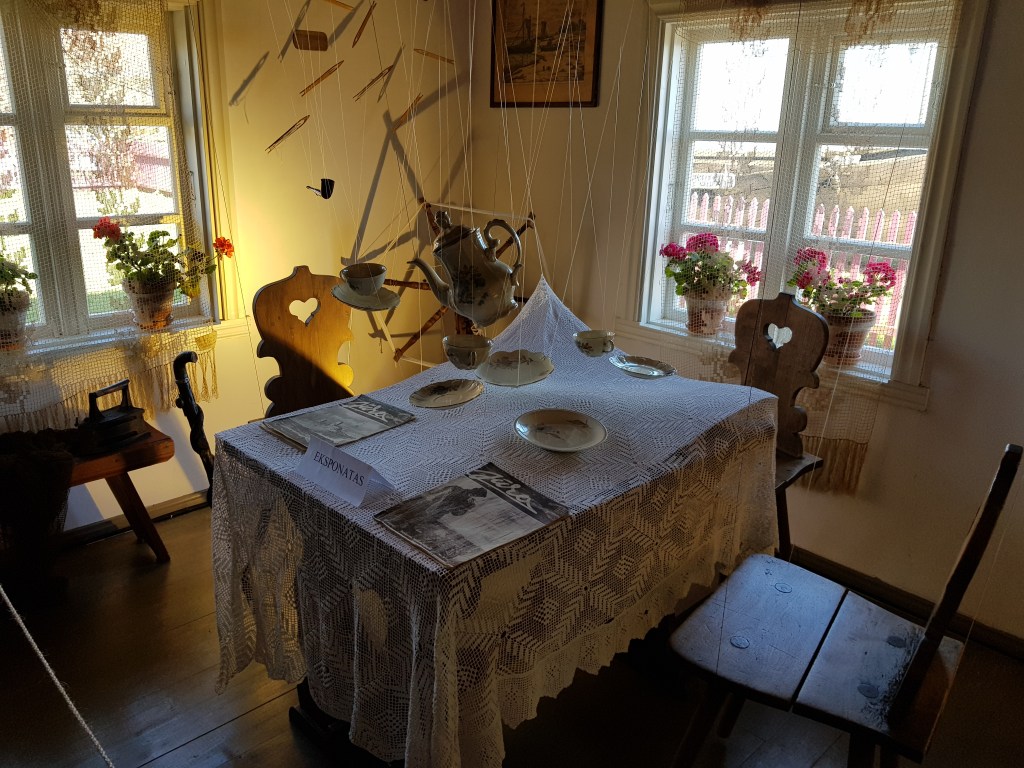
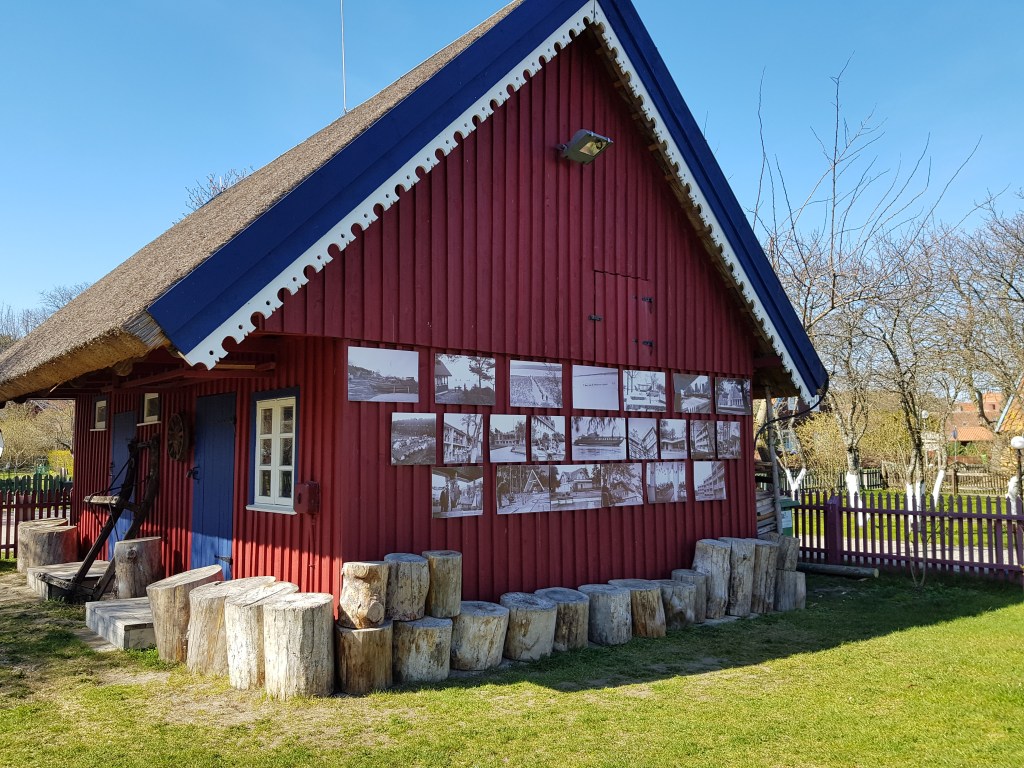
For a village with only 2,385 residents, there is a lot to see in Nida. To gain an understanding of the historic way of life, the Fisherman’s Ethnographic Homestead is an excellent place to start. It is an original homestead furnished as it would have been at the end of the nineteenth century when Martin Purwin (1857-1943) lived there with his wife and three children but presented in a modern way. There are no costumed mannequins, but a teapot and cups dangle in mid-air above the table, as if the Purwin family are invisibly still present. There is further insight to be had at the Curonian Spit History Museum, where the techniques of ice fishing and catching crows are explained. The latter involved netting crows and then killing them biting them in the neck, though the reason was not made clear. The number of beady eyes watching and waiting patiently as we ate a picnic lunch suggest that a good number of crows survived to tell the tale and breed.
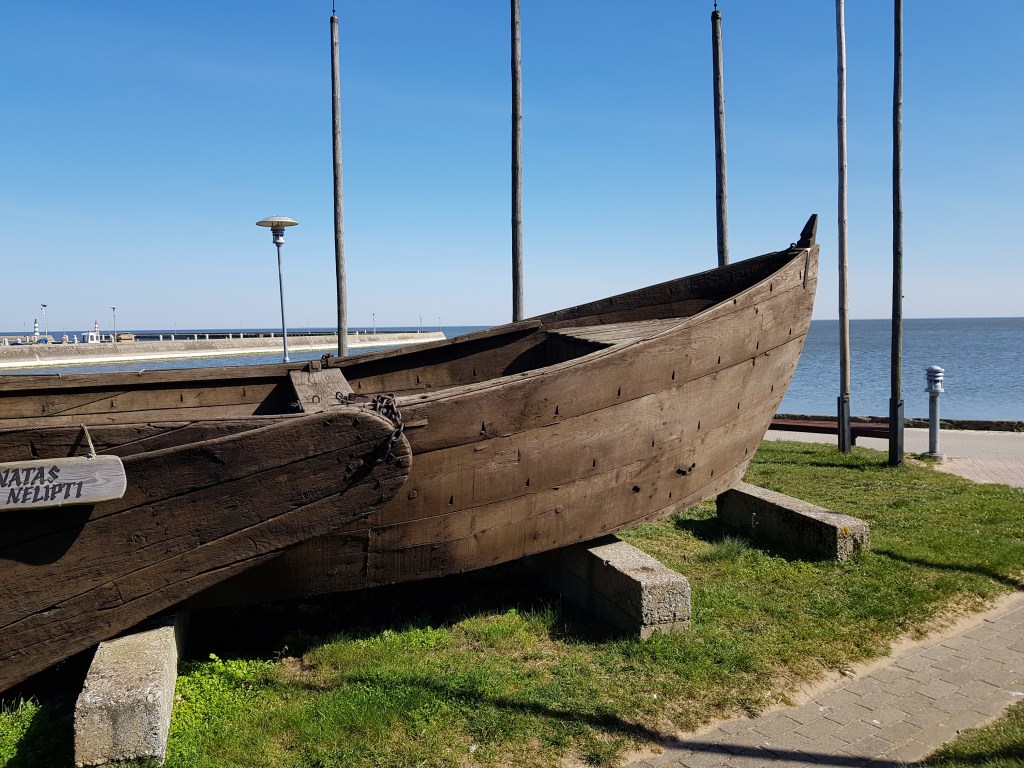

Other local customs were less bloodthirsty. The masts of the flat-bottomed boats used by fishermen were fitted with colourful decorative weathervanes; each village had its own distinctive design for identification. Nida weathervanes can still be seen all over the village.
Nida was not simply a fishing village. From the middle of the nineteenth-century, the Baltic coast began to be opened up for tourism and Nida’s first hotel was opened in 1867. In 1885, the business was taken over by artists’ patron Herman Blode, and Nida became a popular destination for the artists of the Königsberg art academy. Writers were also attracted to Nida. The former holiday home of the Nobel laureate Thomas Mann, now a museum and cultural centre, is situated on a hill to the north of Nida, commanding excellent views over the lagoon.
Whilst the artists’ colony did not survive the Second World War and Soviet occupation, modern day Nida has its own arts traditions. An ‘alley of stars’ in the main square celebrates the music festival ‘“Ben, let’s sail to Nida!”’ which has opened the summer season in the Curonian Spit since 1994.
Yes, let’s sail to Nida (or take a 6-hour bus ride from Vilnius as we did.) It’s definitely worth exploring.
I visited Nida in April 2019
 Travels with me aren't