In the final episode of Star Trek: Deep Space 9, the Chief O’Brien is returning to Earth and considering where to live. Worf, his Klingon colleague, has just one word to say on the subject: “Minsk.” That is one of two things I knew about the capital of Belarus before our visit in April 2019. The other was that Belarus has been slower to westernise than other former Soviet republics.
My first impression, as we drove from the airport into the city was of flat terrain, with expanses of birch forest. Once we reached the city, there was quite a bit of traffic and a fairly high pizzeria count.
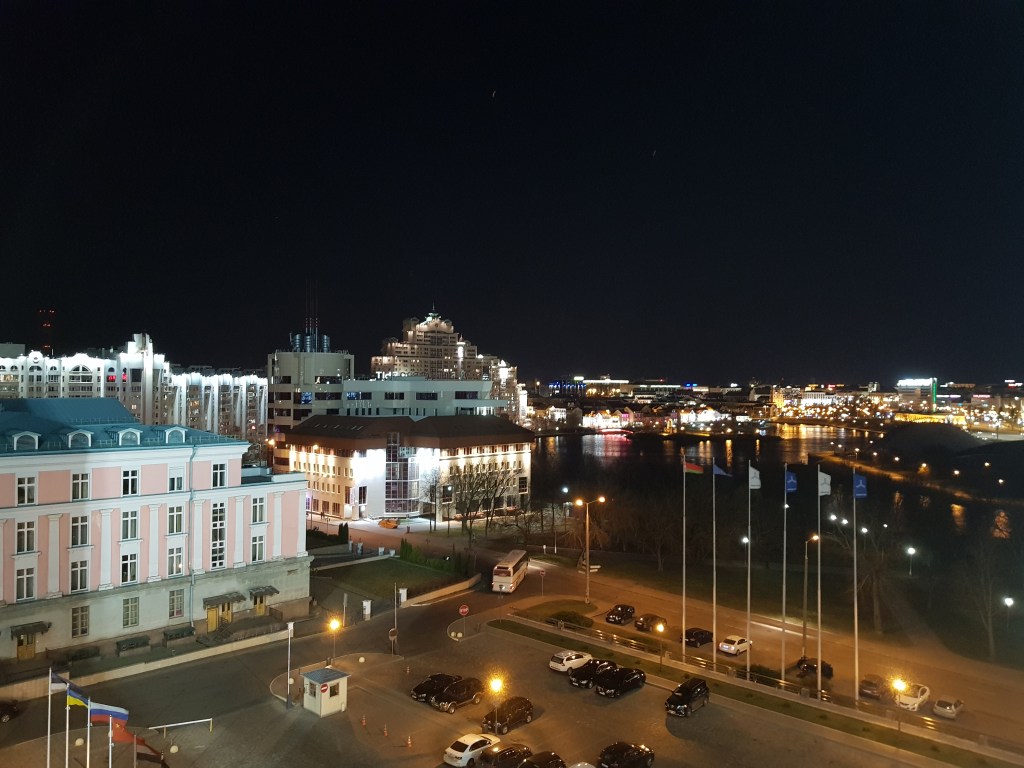
As the hotel was slightly out of the centre and we had not yet got our bearings, we decided to dine in the hotel’s ‘Panorama’ restaurant on the 22nd floor. There was a local wedding party in, with a very loud disco and enthusiastic dancing. It certainly seemed Westernised enough: the bride was wearing a red dress, and the inevitable strains of Chris de Burgh rang out as we tucked in to lamb cutlets with pancakes and duck with cranberry sauce.
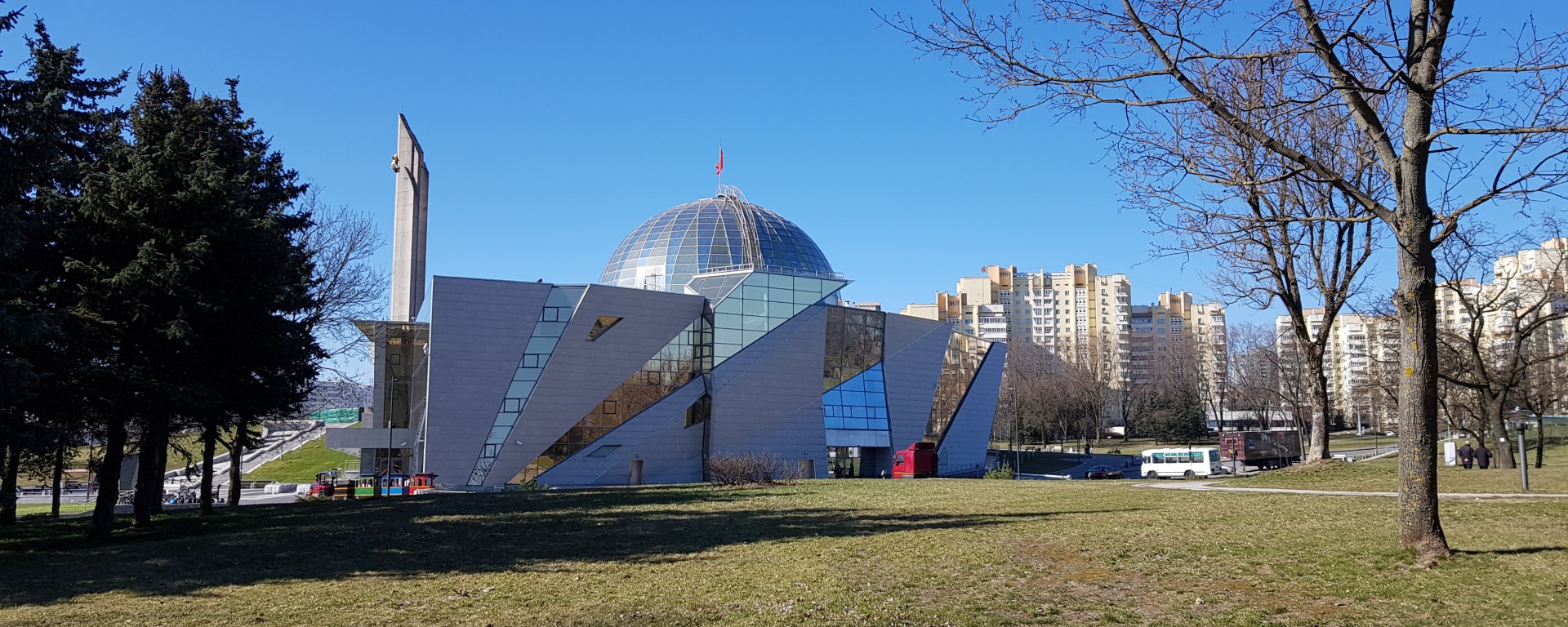
The next morning we strolled along the bank of the Svislach towards Pobedy (Victory) Park. It is the largest of Minsk’s parks. Early on a Sunday morning it was remarkably peaceful as we strolled through a wooded nature reserve on Bird Island in the middle of the artificial Komsomolskoye Lake. Then we turned back towards the nearby State Museum of the Great Patriotic War. The Belarussian landscape has little in the way of natural defensive features and Minsk has been destroyed several times. This museum deals with the last and most terrible destruction, which occurred in World War II. The sombre nature of the subject matter was however somewhat mitigated by the kiddies’ train stop and Segway hire stand outside.
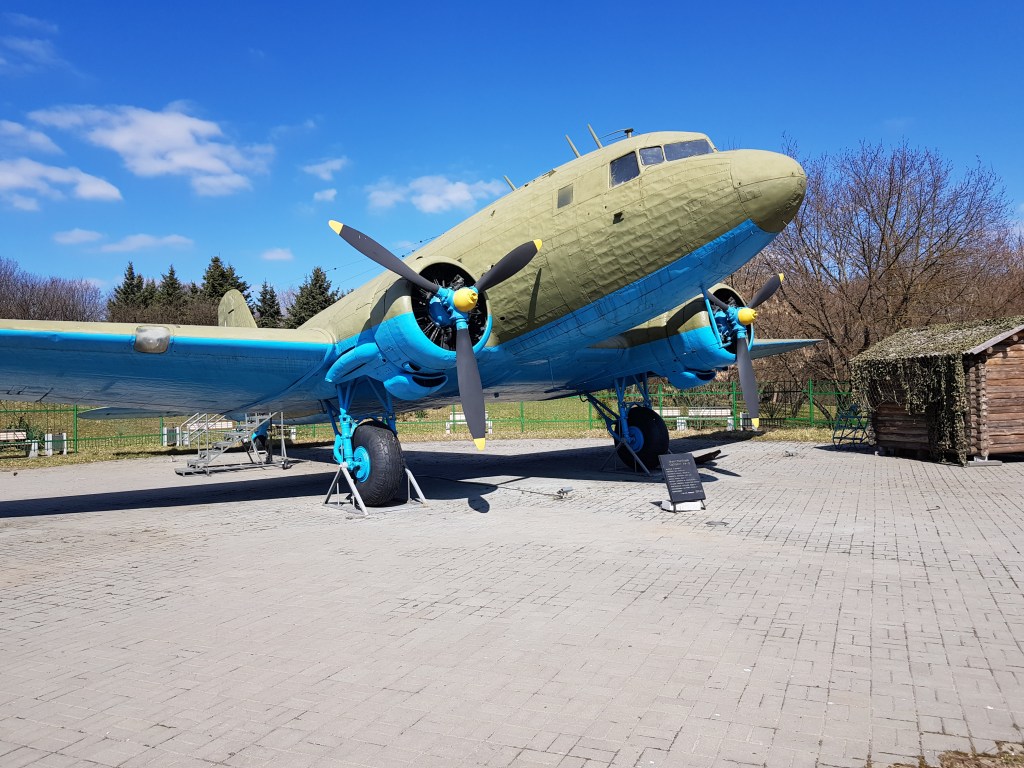
The main part of the museum comprises the road of war – three levels of tanks, planes, mortar guns and even a mobile field kitchen – which serves as the backbone of the museum. Off to the side of this are various halls with a more human perspective. In Hall 4, a flask with human bone embedded symbolises the tragedy of war. The next features a diorama of burning villages on the Soviet Home Front. But Hall 7 represents a partisan village in the forest, complete with a forest school where pupils wrote on birch bark instead of paper. The climax of the visit is the Victory Hall under the museum’s central glass dome, where the names of over 2,000 soldiers, resistance fighters and partisans are recorded on the walls.
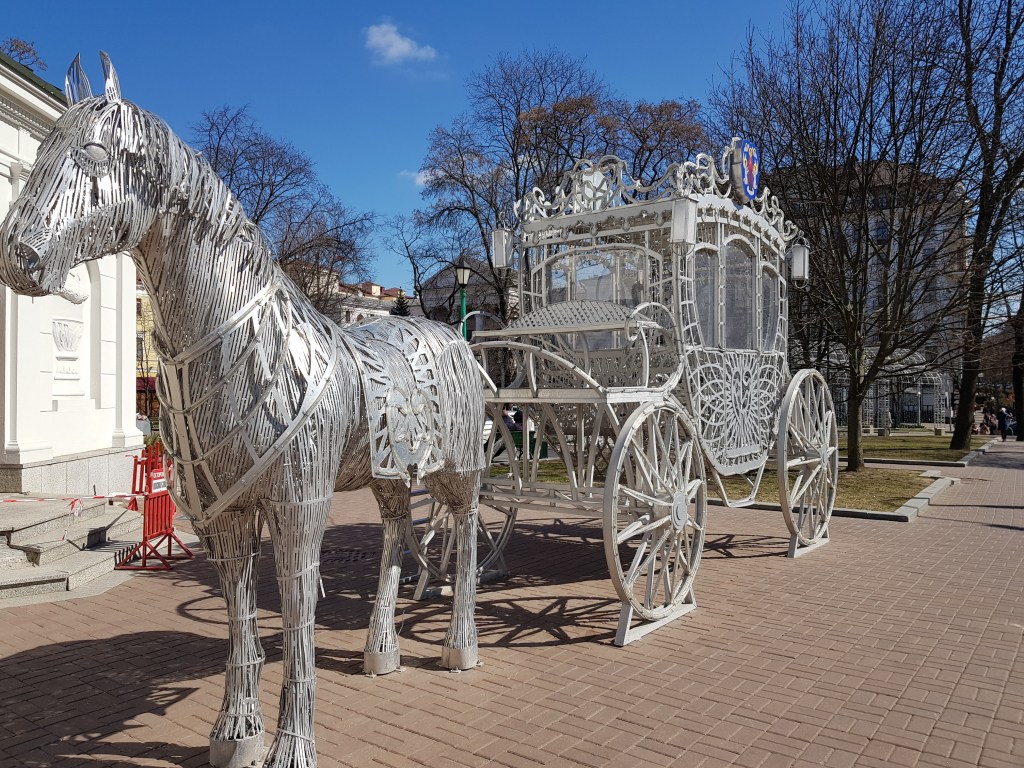
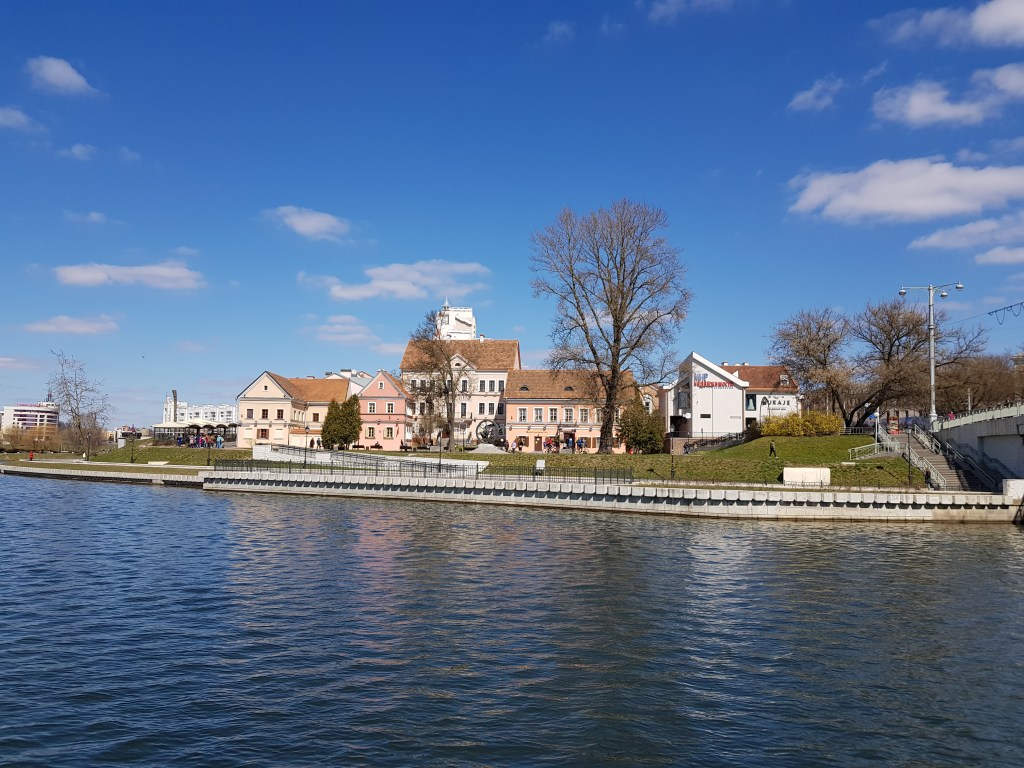
After visiting the gift shop, where an excited small boy wielded his new wooden sword, we followed the river in the opposite direction, towards the city centre. This route took us past a further monument to the futility of war: the Island of Tears. This is a memorial to those who died in ill-fated Soviet Afghan campaign. In the centre is a tiny chapel with sculptures of grieving widows and mothers on the walls. We passed by the cobbled streets of the historic but largely reconstructed suburb of Troitskoye and crossed the river to the Upper Town, where we found Svobody Square and the Holy Spirit Cathedral (built in the 17th century and one of the last surviving monuments of Old Minsk) and the City Hall (rebuilt in 2006, but looking the part nonetheless.) Outside the City Hall is a photogenic sculpture of the governor’s carriage by Vladimir Zhbanov.
The next day we explored the ‘newer’ part of the city, walking to Victory Square. Our route took us past the US Embassy and we were searched by security, even though we had no intention of entering. Victory Square is actually oval in shape and the centre is dominated by a monument to the Great Patriotic War. Below the square is an underground memorial with the names of the fallen.
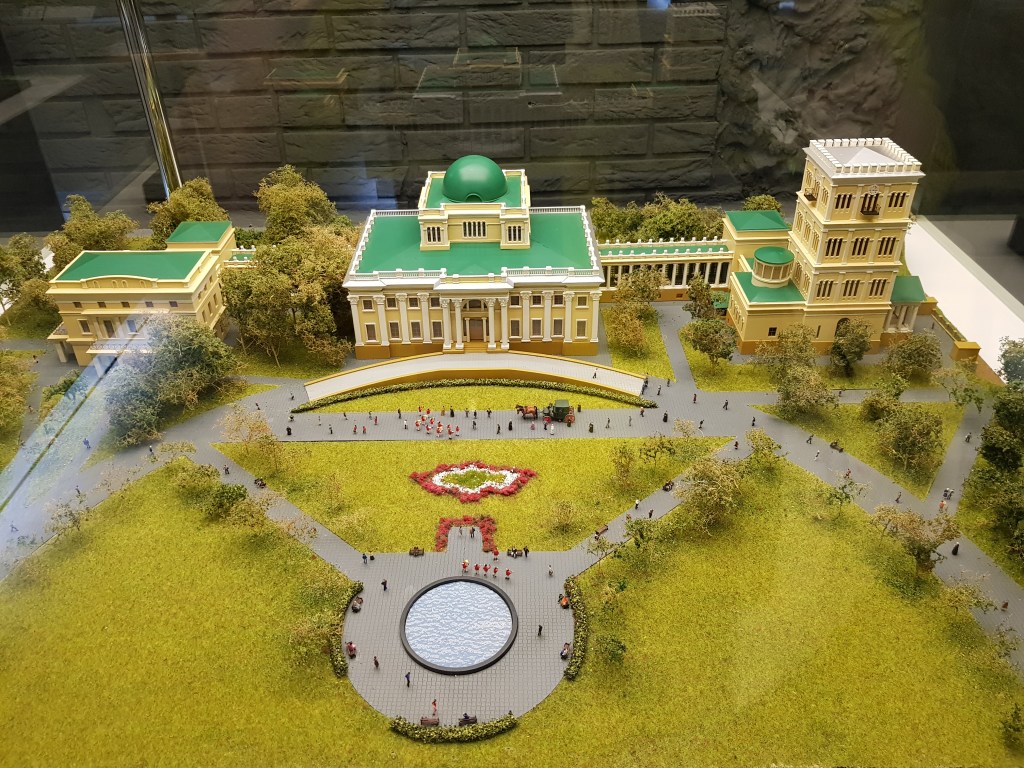
Another subterranean visit followed. In the basement of Trades Union Palace of Culture is the Strana Mini Museum with 19 interactive models of Belarussian sites. Push buttons and the scene changes from day to night, buildings light up, dancers move in the theatre and a fairground comes to life. Audio guides provide information about the history of the buildings.
We walked along Nyezalyezhnashti St, passing the yellow ochre KGB building with its single round watchtower; allegedly built to enable the local commissar to keep an eye on games at the Dynamo stadium. I noted with disappointment that there was a large McDonald’s on the corner of Lenin St. In the Central Bookstore we found a dual language version of Charlie and the Chocolate Factory and a Russian translation of a Jeremy Clarkson book. So far, so Western.
But in the Museum of Contemporary Belarussian Statehood we found an echo of the old Soviet style bureaucracy. Our passport details were noted and we went through airport-style security, before being escorted to 7th floor. The first room contained more models of Belarussian buildings, including the National Library. Then we went up some stairs to a series of rooms dedicated to glory of Belarus. The exhibits were an eclectic mix covering all areas of endeavour, from nuclear power and synthetic gemstones to ice hockey and even Junior Eurovision 2005.
The museum was not typical of Minsk. We had to go out of our way to find it. Although it was easy enough to find the right building (the Presidential Office) we only located the right entrance at our third attempt. If it hadn’t been mentioned in our Bradt guide, we would never have known it existed. In general, Minsk is moving on from its troubled past, and with its wide boulevards and pleasant riverside promenade, it’s a pleasant place for a city break. I think Worf might have had a point.
I visited Minsk in April 2019


One thought on “Recommended by Klingons”